
Having a set of investment beliefs is important. It gives us a framework from which to operate in an uncertain and ever-changing world. Those same beliefs, however, can create a false sense of how much control we have, particularly over the financial markets and the asset classes in which we invest our money.
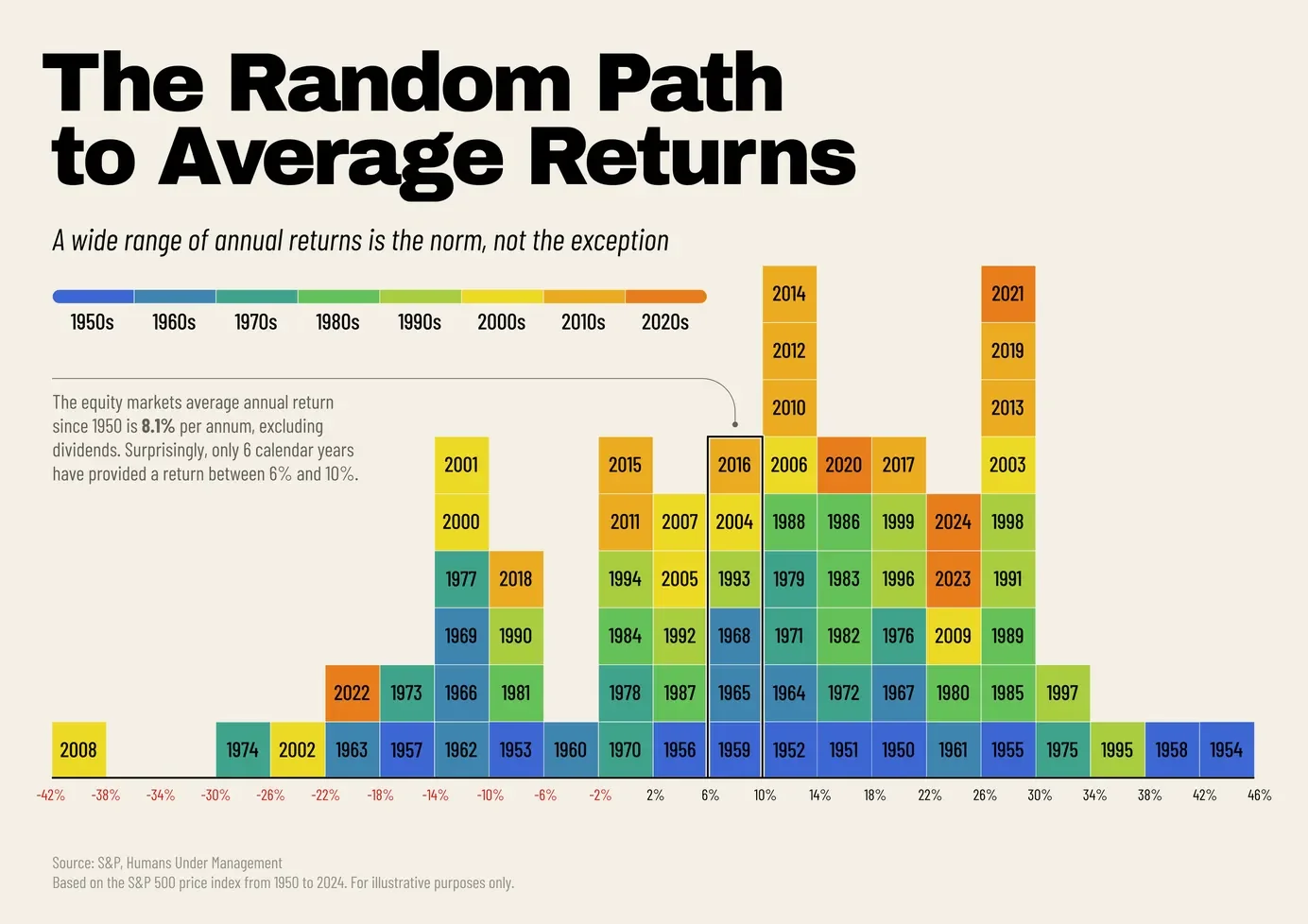
Since 1950, the S&P 500 price index, often considered the world’s premier stock market index has delivered an average annual return of roughly 8%. Returns of that size are a briliant engine for building long-term wealth. The trouble is that they do not arrive in tidy, predictable manner.
While the long-run average has been around 8%, only six calendar years since 1950 have produced that level of returns. The average is real, but almost no single year is average. Most years deliver considerably more or considerably less.
As an exercise, choose a decade from the chart below (each is colour-coded) and see the wide range of returns investors experienced along the way.
Fully understanding this is one of the first steps in becoming a better long-term investor.
Holding realistic expectations is a cornerstone of building wealth and a humbling reminder that our investment beliefs should guide how we behave, not predict how markets move.
If reading this has prompted questions about your own investments or you would simply like to talk through how these ideas apply to your own situation, I would love to hear from you.